

Britain can deliver a decade of rising prosperity.
The 2030 Prosperity Alliance brings together business, economists and civic leaders to close the gap between Britain's economic potential and its recent performance.
£93bn
How much larger the UK economy would be if it had matched the rest of the G7’s growth since the financial crisis
£36bn
Additional tax revenue – enough to cut the basic rate of income tax by 5p, or increase NHS spending by 20%
£100bn+
Global revenue represented by Alliance founding members
in the media

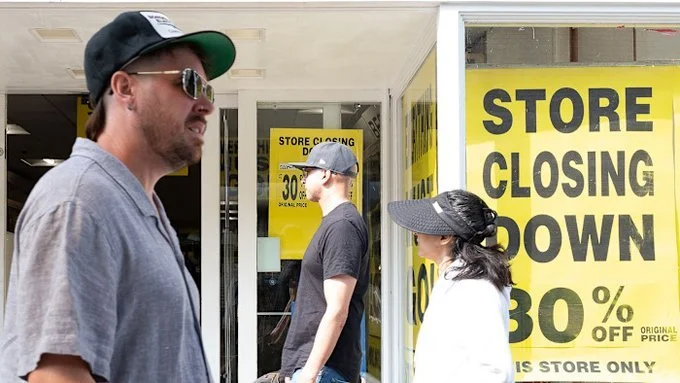
“Low UK growth is a product of neglect”
"Any serious policy must start to tackle the neglect that has resulted in our backlog of low investment,"
Paul Johnson
More coverage
Luke Akehurst MP, LabourList
Nations that faced sustained economic underperformance have transformed themselves through bold reform.
Explore three different case studies to learn how the UK can do the same or read the full report here.
New Zealand
1980s
Conviction reformers reshape a country
New Zealand spent political capital they knew might cost them office using a combination of political bravery and strategy to sell tough reforms.
Explore Case StudySweden
1990s
Consensus politics saves the Swedish model
Sweden turned its worst post-war crisis into a cross-party settlement that has held for thirty years.
Explore Case StudyGermany
2000s
The sick man of the Euro recovers
Chancellor Schröder's Hartz reforms transformed Germany from Europe's stagnant giant into its most competitive economy.
Explore Case StudyEconomic resets
are possible

Britain’s prosperity gap
Our first research paper, Britain’s Prosperity Gap: Establishing the Baseline sets out why a reset on UK growth is urgently needed.
It’s easy to get lost in big numbers and macroeconomic charts. The table below cuts the country by age.
It shows how real incomes and home ownership have changed for each generation across two eras — the years to the financial crisis and the long stagnation since.
The pattern is stark: pensioners’ incomes rose strongly and their home ownership climbed, while younger working-age households saw incomes stall and ownership fall away. To put faces to it, the profiles that follow pair each group’s story with new data from focus groups and polling.
GROWTH HAS STAGNATED SINCE 2008
UK GDP per capita against its 1960-2005 trend, extrapolated forward. World Bank WDI, constant 2015 US$.
BY GENERATION - CHANGE OVER TWO ERAS
working-age ages 25-44
working-age ages 45-64
INCOME 1995-2007
INCOME 2007-Today
OWNERSHIP 1995-2007
OWNERSHIP 2007-Today
Real median household income before housing costs is the percentage change; home ownership is the percentage-point change. Source: DWP Households Below Average Income, via Stat-Xplore, 1994/95-2007/08 and 2007/08-2024/25, individuals grouped by age. Owner occupation amongst 25-44s fell from 72% to 55%.
Britain’s growth trajectory can be reset, but the window to do it is closing fast.
Without growth, the tax take cannot keep pace with the rising demands of an ageing population, the NHS and defence.
Two thirds of voters across all parties believe lasting improvement is possible with the right choices. Britain has the universities, the life sciences, the AI sector, the capital markets and the rule of law to do the same. The right long term reforms now can create a Britain that once again keeps pace with, and can ultimately outperform, its peers.
Read the full report now.
Britain agrees: back business, back growth
“There is significant public support for long-term strategic decisions to support economic growth.This spans the entire political spectrum.
Britain has renewed itself before and this data shows there is public will to do it again.”
- Anand Menon
download the full report
Members

RICK HAYTHORNTHWAITE
Chair of the 2030 Prosperity Alliance, Chair of NatWest Group
“Britain is one of the best places to work, invest and do business. But realising the potential of the 2030s will require greater ambition and a willingness to confront the choices needed to strengthen our economy.
I’m excited to be working with businesses across Britain’s nations and regions while engaging with the public to show support can be built for the steps needed to deliver a more prosperous country.”
Rick Haythornthwaite - Chair

PAUL JOHNSON CBE
Chief Economist and Head of the Secretariat for the 2030 Prosperity Alliance
-

Sir John Manzoni
Chair of SSE & Diageo
-

Paula Reynolds
Chair of National Grid
-

Sir Jeremy Darroch
Chairman of Reckitt
-

Philip Jansen
Chair of WPP and Heathrow
-

Scott Wheway
Chair Designate of L&G
-

Caroline Silver
Chair of Barratt Redrow

SHEVAUN HAVILAND
Director General of the British Chambers of Commerce
“Businesses of all sizes know just how great the UK can be as a place to start, grow and innovate. The challenge now is to seize the full opportunity the 2030s present.
Through this Alliance we are bringing together a coalition of businesses to help break down the barriers holding that opportunity back, and to listen to the people who know what business needs to prosper in the decade ahead – the firms creating jobs and growth across the country.”
Shevaun Haviland – Director General of the BCC
-
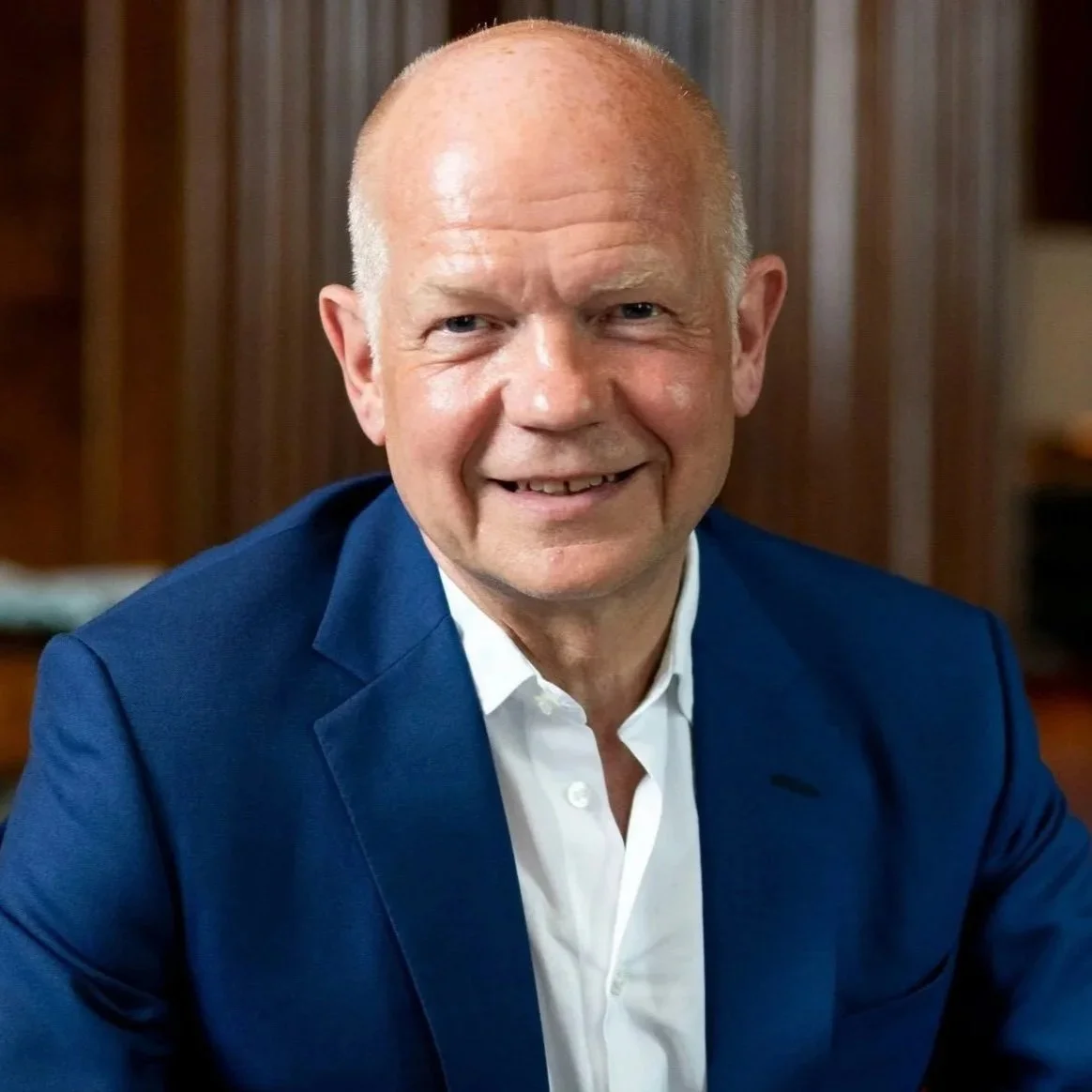
Lord William Hague
Former UK Foreign Secretary
-

Dame Carolyn Fairbairn
Former Director-General of the CBI
-

Sir Trevor Phillips
Journalist, Broadcaster and Former Chair of the Equality and Human Rights Commission
-

Lord John Hutton
Former Labour Cabinet Minister
-

Baroness Rona Fairhead
Former Minister for International Trade
Open Letter
If the UK had matched the rest of the G7’s average per capita growth since the financial crash, our economy would be £93bn larger. The additional tax revenue alone could cut the basic rate of income tax by 5p or increase NHS spending by 20%.
Britain has enormous economic strengths and could match this rate of growth in the 2030s if our political leaders are supported to prioritise decisions for the long-term.
For too long, businesses and almost every other stakeholder have come to Westminster with narrow demands to protect what we have rather than to shape what the country needs. If politics is trapped in quick fixes, business and civic institutions have too often encouraged it.
It is an unenviable time to be a politician: structural problems reflect decisions made years earlier, while democratic accountability demands quick results. The difficult trade-offs needed to strengthen the UK economy must be set out clearly and command broad support – something our politics has historically lacked. The 2030 Prosperity Alliance aims to fill that gap: our analysis seeks to inform policymakers and test competing solutions with businesses and the public.
We are an apolitical campaign focused on harnessing Britain’s competitive advantages to deliver a decade of rising prosperity and close the “inaction gap” between what the country needs and what politics alone can deliver.
This is possible. We have already spoken to voters: two-thirds of young people (under-35s) say things in Britain can improve, with just 28% saying our best days are behind us.
Future generations will inherit the consequences of our short-termism. They are optimistic and deserve better.